
How to Calm Down During a Panic Attack
A panic attack is your body's alarm system firing without a real threat. Here is what is happening, what to do in the moment, and how to come back down.
A panic attack can feel like you are dying. Your chest tightens, your heart pounds, your hands go numb, and your brain screams that something is seriously wrong. But nothing is wrong - not in the way your body is telling you. A panic attack is a false alarm: your nervous system has detected a threat that does not exist and launched a full emergency response. The good news is that panic attacks follow a predictable pattern, they always end, and there are specific things you can do to shorten them. This guide covers what is actually happening in your body during panic, what helps, and what to avoid.
What is actually happening during a panic attack
A panic attack is your fight-or-flight system activating without a real threat. Your amygdala - the brain's threat-detection center - sends an emergency signal, and your body responds as if you are in physical danger. Adrenaline floods your system. Your heart rate spikes to pump blood to your muscles. Your breathing speeds up to take in more oxygen. Blood moves away from your extremities (causing tingling and numbness) and toward your core.
All of these sensations are the same ones you would feel if a car were speeding toward you. The difference is that during a panic attack, there is no car. Your brain misfired, but your body does not know that - it responds to the signal, not to the reality.
This is why telling yourself "calm down" does not work. Your conscious mind knows you are safe, but your autonomic nervous system has already committed to the emergency response. You cannot reason your way out of it. You have to work with the body to bring the system back down.
The most important thing to understand is this: a panic attack has a biological ceiling. The adrenaline surge peaks within about 10 minutes and then begins to clear. Your body literally cannot sustain the peak longer than that. The attack will end - the question is whether you ride it out or accidentally make it last longer by fighting it.
What to do in the first 60 seconds
The first minute of a panic attack is the hardest because the symptoms are escalating and your brain is telling you this is an emergency. Your only job in these first 60 seconds is to slow your exhale.
Breathe out longer than you breathe in. Inhale through your nose for 4 counts, then exhale through your mouth for 6 to 8 counts. This is not about relaxation - it is about biology. A long exhale activates the vagus nerve, which triggers your parasympathetic nervous system (the "brake pedal" that counteracts fight-or-flight). Even if it does not feel like it is working immediately, the signal is being sent.
If counting feels impossible, try this: breathe out as if you are blowing through a straw. This naturally slows and extends the exhale without requiring focus. Do this 5 times. Then 5 more.
The second thing to do is name it. Say - out loud if you can - "This is a panic attack. I have had these before. It will end." This engages your prefrontal cortex (the rational-thinking part of your brain) and starts pulling resources away from the amygdala. Labeling the experience as "panic attack" rather than "emergency" changes how your brain processes it.
Grounding your body back to the present
Once you have established the exhale rhythm (even roughly), start anchoring to physical reality. Panic pulls you into your head - into predictions, catastrophic interpretations, and body monitoring. Grounding pulls you back into the room.
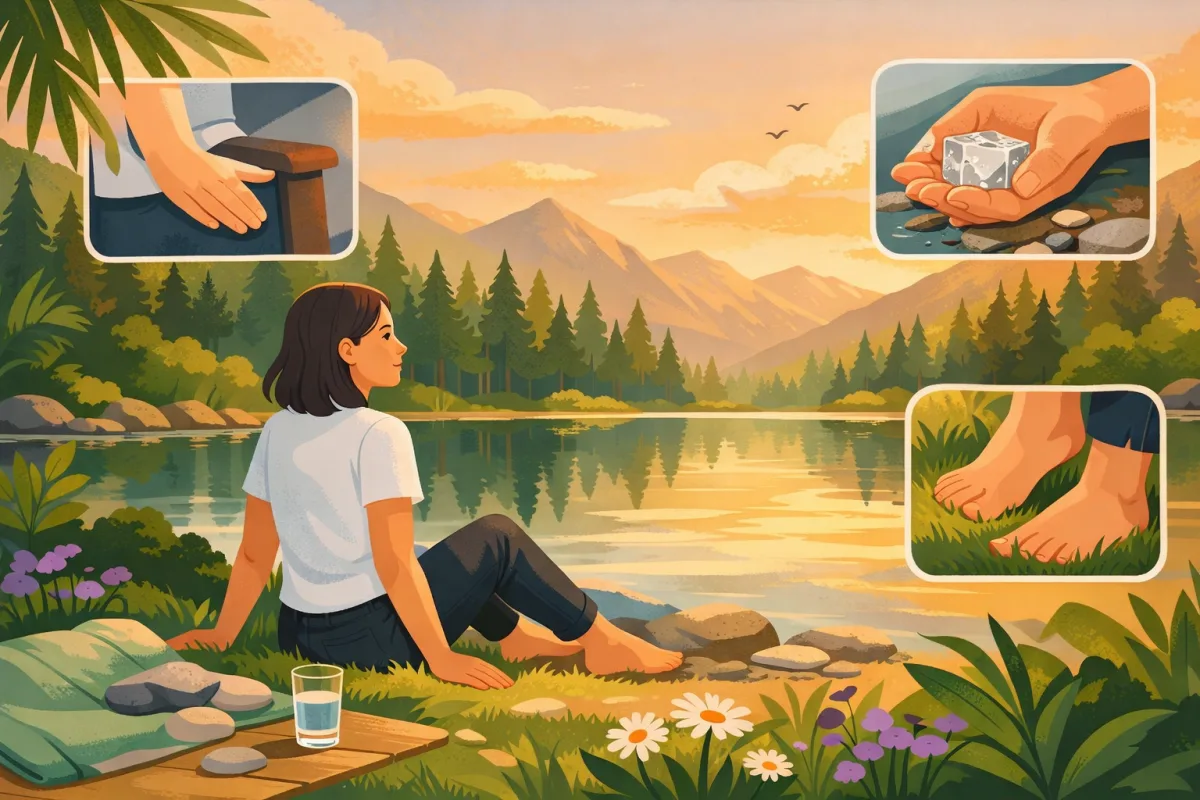
Press your feet into the floor and notice the pressure. Squeeze something solid - a table edge, a cold glass, your own fists. Feel the texture, the temperature, the weight. These sensations compete with the panic signals for your brain's attention, and sensory data from the present moment will always win over predictions about the future if you actively engage it.
The 5-4-3-2-1 method works well here: name 5 things you see, 4 you can touch, 3 you hear, 2 you smell, 1 you taste. But if your panic is too intense for this level of focus, go simpler. Run cold water over your wrists for 30 seconds. The temperature shock activates the mammalian dive reflex, which directly slows heart rate.
Do not try to analyze what caused the panic while it is happening. That analysis belongs later, after your nervous system has settled. Right now, the only task is getting back into your body and out of the spiral.
What makes panic attacks last longer
Several common instincts actually extend a panic attack rather than ending it.
Fighting the symptoms makes them worse. Tensing against the chest tightness creates more tension. Trying to force your heart to slow down adds a layer of frustration on top of the fear. The panic attack is an involuntary process - fighting it is like trying to stop a sneeze by clenching your entire body.
Breathing too fast is the most common mistake. Hyperventilating (fast, shallow breathing) drops your carbon dioxide levels, which causes more dizziness, more tingling, and more chest tightness - which your brain interprets as more danger. This is why the extended exhale matters so much: it prevents the hyperventilation spiral.
Googling your symptoms mid-attack feeds the catastrophic interpretation. "Chest pain panic attack or heart attack" will return results that include heart attack, and your already-panicking brain will lock onto that. Close the search. You can research later.
Running away from wherever you are teaches your brain that the location was dangerous. This creates a conditioned fear response: next time you are in that place, panic becomes more likely. If you can, stay where you are and let the attack pass. You are proving to your brain that this place is safe.
After the attack - what helps you recover
A panic attack is physically exhausting. Your body just went through the equivalent of sprinting from a predator. Give yourself recovery time.
Drink water. The adrenaline surge dehydrates you and often leaves a dry mouth. Hydrating is a simple physical reset that your body needs.
Avoid immediately analyzing what happened. The urge to figure out "why" is strong, but your brain is still in a heightened state for 30 to 60 minutes after the visible symptoms end. Analysis during this window tends to be anxious analysis, not clear thinking. Wait at least an hour before trying to understand the trigger.
When you do reflect, look for patterns rather than causes. Panic attacks are often triggered by a combination of factors: sleep deficit, caffeine, a stressful week, a specific physical sensation that your brain misinterpreted. Tracking these patterns over time helps you predict vulnerable windows without obsessing over any single episode.
If panic attacks are happening more than once a month, or if you are avoiding places and activities because of the fear of having one, talk to a healthcare professional. Panic disorder is highly treatable, and the avoidance cycle is the part that tends to shrink your life the most.
A panic attack is your body's loudest alarm. It is real, it is intense, and it is temporary. You do not need to stop it - you need to let it peak and help it come down.
Related pages
Frequently asked questions
Can a panic attack actually hurt you? +
No. A panic attack is deeply unpleasant but not medically dangerous. The chest pain is caused by muscle tension and rapid breathing, not a cardiac event. The dizziness is from hyperventilation, not a neurological problem. Your body is running an emergency response to a non-emergency - once the adrenaline clears, everything returns to normal. If you are ever unsure whether symptoms are panic or a medical issue, seek medical evaluation. It is always okay to get checked.
How can I tell the difference between a panic attack and a heart attack? +
Panic attacks usually involve tingling or numbness in the hands and face, a feeling of unreality, and symptoms that peak within 10 minutes and then gradually fade. Heart attack symptoms more commonly include pressure or squeezing pain (not sharp pain), pain radiating to the arm or jaw, nausea, and symptoms that persist or worsen rather than peaking and fading. When in doubt, call emergency services - they would rather evaluate a panic attack than miss a cardiac event.
Why do I keep getting panic attacks even when nothing stressful is happening? +
Panic attacks are not always triggered by obvious stress. They can be triggered by subtle physical cues (a change in heart rate from caffeine, a slight dizziness from standing up quickly) that your brain misinterprets as danger. Over time, the fear of having another attack becomes its own trigger - this is the cycle that turns isolated panic attacks into panic disorder.
Should I avoid caffeine if I get panic attacks? +
Caffeine is worth experimenting with. It increases heart rate, can cause jitteriness and shallow breathing, and mimics the early physical sensations of panic - which your brain may then interpret as an incoming attack. Many people with panic attacks find that reducing or eliminating caffeine noticeably reduces the frequency of episodes. Try two weeks without it and see if you notice a difference.
Author
Sebastian Cochinescu · Founder, Anima Felix
Founder of Anima Felix. Writes about everyday anxiety patterns, practical calming tools, and how conversational product design can support people in anxious moments.
Read author profileWhere Anima Felix fits
If panic attacks keep coming back
Anima Felix includes guided breathing and grounding exercises designed for exactly these moments, plus a chat companion for processing the experience afterward.
More from the blog
How to Stop Overthinking at 3am
Your brain is louder at 3am because it has nothing else to compete with. Here is what actually helps when the thoughts will not stop.
Understanding anxietyWhat Is an Anxiety Loop?
Worry creates tension. Tension creates more worry. The loop does not stop because the brain thinks it is keeping you safe. Here is how the cycle works.
Practical toolsGrounding Exercises for Panic Attacks
When a panic attack hits, your brain loses contact with the present. Grounding exercises reconnect you to what is real and safe, right now.
Relationship anxietyRelationship Anxiety vs Real Problems: How to Tell the Difference
The hardest part of relationship anxiety is that it mimics real concern. Here is how to tell whether the alarm is a pattern or a signal.
Brain healthWhat Is the Brain Care Score? What It Means for Stress, Sleep, Relationships, and Anxiety
The Brain Care Score is a brain-health framework, not an anxiety test. But its stress, sleep, relationship, and purpose factors make it highly relevant if anxiety keeps knocking those areas off balance.
Night anxietyWhy Does Anxiety Get Worse at Night?
Nighttime anxiety is not random. Your brain, your hormones, and the absence of daytime structure all work together to make worry feel louder after dark.
Social anxietySigns You Have Social Anxiety, Not Just Shyness
Shy people feel nervous in new situations and then warm up. Social anxiety does not let you warm up - it keeps the threat alarm running the entire time.
Financial anxietyFinancial Anxiety: Why Money Stress Feels Physical
Financial anxiety does not stay in your head. It shows up as chest tightness, stomach problems, and sleepless nights - because your brain treats money threats like physical ones.