
Signs You Have Social Anxiety, Not Just Shyness
Shy people feel nervous in new situations and then warm up. Social anxiety does not let you warm up - it keeps the threat alarm running the entire time.
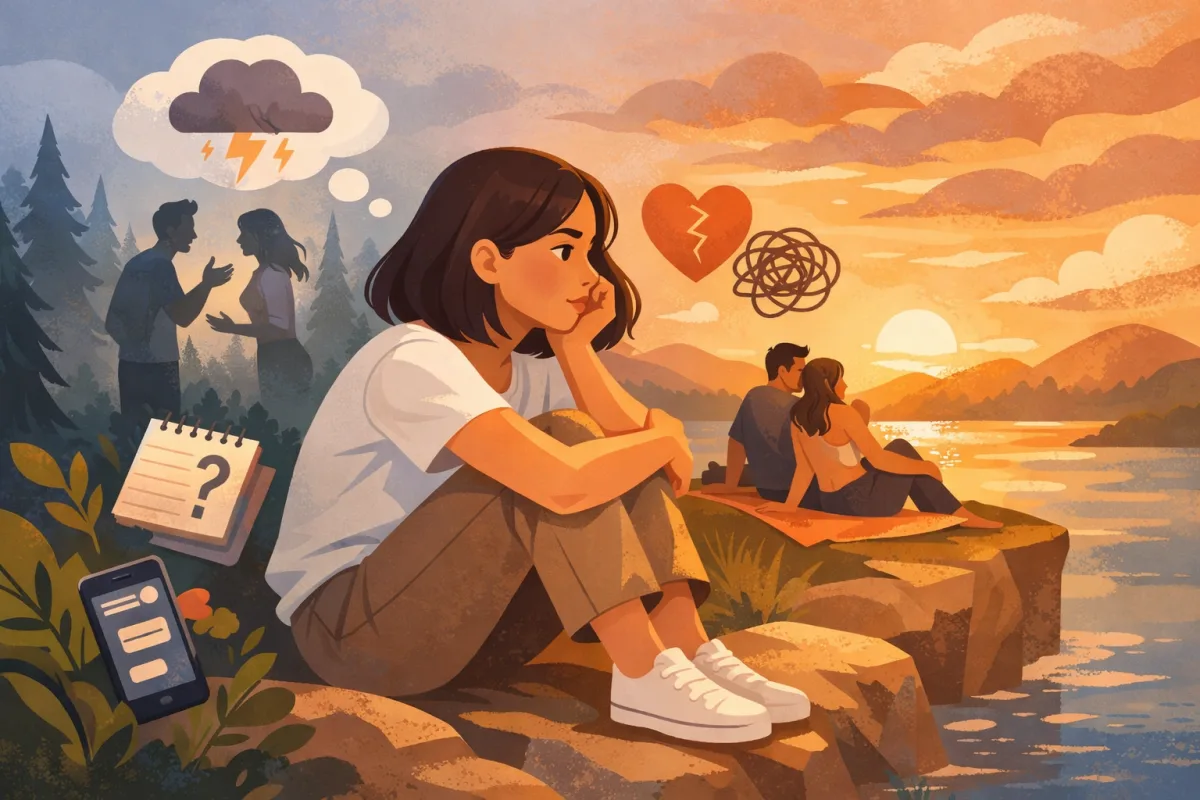
Most people feel awkward at parties sometimes. Most people get nervous before a presentation. That is normal, and it is not social anxiety. The difference between shyness and social anxiety is not about intensity alone - it is about what happens next. Shy people feel initial discomfort and then adapt. Social anxiety keeps the discomfort locked in place, generates worst-case predictions, and then punishes you for hours or days afterward with replays of everything you said wrong. If you have ever wondered whether your social discomfort is "just how you are" or something more, these are the signs that point toward social anxiety.
Shyness is a feeling - social anxiety is a pattern
Shyness is a temperament trait. It means you feel initial hesitancy in unfamiliar social situations, and it usually resolves as you settle in. A shy person might be quiet for the first 20 minutes at a gathering, then gradually join conversations and enjoy themselves. Afterward, they feel fine - maybe a little drained if they are introverted, but not distressed.
Social anxiety is a self-reinforcing cycle that does not resolve with exposure in the moment. It operates in three phases: anticipation, endurance, and post-event processing - and each phase generates its own suffering.
In the anticipation phase (hours, days, or even weeks before a social event), your brain runs simulations of everything that could go wrong. You imagine awkward silences, people judging you, saying something embarrassing, being visibly nervous. These simulations feel real because your body responds to them as if they are happening: elevated heart rate, nausea, muscle tension.
In the endurance phase (during the event), you are hyper-focused on monitoring yourself. You are watching your own words, your body language, your facial expressions, and simultaneously scanning other people for signs of judgment or disapproval.
In the post-event processing phase (after the event), your brain replays the interaction in detail, highlighting everything you said that could have been perceived negatively. This replay can last hours or days and often distorts what actually happened.
Shyness does not have these three phases. It has one phase - initial discomfort - and then it fades.
The avoidance test
The clearest diagnostic difference between shyness and social anxiety is avoidance behavior. Ask yourself: "Am I declining or avoiding social situations because of how I expect to feel?"
Shy people might prefer smaller groups or need more warm-up time, but they still go. They still accept invitations, attend events, and participate in social life - even if they are not the loudest person in the room.
Social anxiety shrinks your world. You start declining invitations not because you do not want to go, but because the anticipated distress feels unbearable. You avoid making phone calls when an email would work. You skip events where you might not know anyone. You choose self-checkout instead of cashier lines. You rehearse what to say before calling to order food.
Each avoidance provides immediate relief, which your brain records as: "That situation was dangerous and avoiding it was the right call." This means the next encounter with a similar situation triggers even more anxiety, leading to more avoidance. Over months and years, the circle of what feels safe gets smaller.
If your social discomfort is causing you to avoid things you actually want to do - friendships, career opportunities, experiences - that is not shyness. That is a pattern that is limiting your life.
The physical symptoms no one talks about
Social anxiety is not just "feeling nervous." It produces physical symptoms that can be intense and sometimes embarrassing, which adds another layer of anxiety on top.
Common physical symptoms include blushing (and then being anxious about the blushing being visible), sweating (especially hands and underarms), trembling or shaky voice, stomach problems before social events (nausea, diarrhea), a tight throat that makes it hard to speak normally, a blank mind where you suddenly cannot think of words, and a racing heart that you become convinced other people can hear or see.
These symptoms happen because your sympathetic nervous system is activated - the same fight-or-flight response that would fire if you were facing a physical threat. Your brain has classified "other humans observing me" as a danger, and your body is responding accordingly.
One of the cruelest aspects of social anxiety is that the physical symptoms themselves become a source of worry. You are not just afraid of saying something wrong - you are afraid of visibly shaking, blushing, or sweating, which would "prove" to everyone that something is wrong with you. This creates a feedback loop: anxiety produces symptoms, symptoms produce more anxiety about being seen as anxious.
The inner critic soundtrack
People with social anxiety have an internal narrator that most people do not. This voice runs a constant commentary during social interactions, and it is overwhelmingly negative.
It sounds like: "They think you are boring." "That was a stupid thing to say." "Everyone noticed you stumbled over that word." "They are only being nice because they feel sorry for you."
Shy people might think "this is uncomfortable" in a social situation. The social anxiety narrator generates specific accusations of inadequacy and assigns confident interpretations to other people's thoughts - as though mind-reading were possible and always returned the worst possible result.
This narrator is what CBT (cognitive behavioral therapy) calls automatic negative thoughts. They are automatic because you do not choose to think them. They are negative because the social anxiety filter only produces threat-based interpretations. And they are persistent: they do not respond to reassurance or positive outcomes.
A key difference from shyness: the shy person leaves a party thinking "I'm glad that's over." The socially anxious person leaves a party thinking "I ruined it" - and then spends the next three days compiling evidence for that conclusion.
When to take it seriously
Social anxiety exists on a spectrum. Mild social anxiety might make you uncomfortable at networking events but not prevent you from attending. Severe social anxiety can make leaving the house feel impossible.
The threshold for taking it seriously is not about how anxious you feel - it is about how much your life has changed because of it. Consider these questions: Have you turned down job opportunities because they involved presentations, meetings, or client interaction? Have friendships faded because you kept declining invitations until people stopped asking? Do you avoid dating not because you do not want connection, but because the process feels unbearable?
If the answer to any of these is yes, the pattern is costing you something real, and it is worth addressing directly rather than accommodating.
Social anxiety responds well to treatment. CBT has strong evidence for reducing both the anticipatory anxiety and the post-event rumination. Gradual exposure (not forcing yourself into overwhelming situations, but systematically approaching avoided scenarios in small steps) rebuilds the brain's evidence base that social situations are survivable. And understanding the pattern - as you are doing right now by reading this - is genuinely the first step, because you cannot interrupt a cycle you cannot see.
Shyness says "I need a minute to warm up." Social anxiety says "Everyone is watching, everyone is judging, and I will replay this for days." One is a preference. The other is a prison.
Related pages
Frequently asked questions
Can you be both shy and have social anxiety? +
Yes. Shyness is a temperament trait and social anxiety is a clinical pattern - they can overlap. Many people with social anxiety are also naturally introverted or shy, but not all shy people have social anxiety, and not all people with social anxiety are shy. Some socially anxious people appear outgoing but experience intense internal distress during and after interactions.
Can social anxiety develop later in life? +
Social anxiety can develop at any age, though it most commonly appears during adolescence. Life events like bullying, public humiliation, a period of social isolation, or a major transition (new job, new city, divorce) can trigger social anxiety in people who never experienced it before.
Is social anxiety the same as introversion? +
No. Introversion means you recharge by spending time alone and find extended socializing draining - but it does not involve fear, avoidance, or negative self-evaluation. An introvert might leave a party early because they are tired. A person with social anxiety might leave early because they are convinced everyone noticed they said something awkward.
What is the difference between social anxiety and being awkward? +
Everyone has awkward moments. The difference is the aftermath. A socially comfortable person says something awkward, cringes briefly, and moves on. A person with social anxiety says something awkward and then replays it for days, interprets it as proof of fundamental inadequacy, and uses it as a reason to avoid future social situations.
Author
Sebastian Cochinescu · Founder, Anima Felix
Founder of Anima Felix. Writes about everyday anxiety patterns, practical calming tools, and how conversational product design can support people in anxious moments.
Read author profileWhere Anima Felix fits
If social anxiety is shrinking your world
Anima Felix includes breathing and grounding tools for the moments before, during, and after social situations - plus a social anxiety path designed for this specific pattern.
More from the blog
How to Stop Overthinking at 3am
Your brain is louder at 3am because it has nothing else to compete with. Here is what actually helps when the thoughts will not stop.
Understanding anxietyWhat Is an Anxiety Loop?
Worry creates tension. Tension creates more worry. The loop does not stop because the brain thinks it is keeping you safe. Here is how the cycle works.
Practical toolsGrounding Exercises for Panic Attacks
When a panic attack hits, your brain loses contact with the present. Grounding exercises reconnect you to what is real and safe, right now.
Relationship anxietyRelationship Anxiety vs Real Problems: How to Tell the Difference
The hardest part of relationship anxiety is that it mimics real concern. Here is how to tell whether the alarm is a pattern or a signal.
Brain healthWhat Is the Brain Care Score? What It Means for Stress, Sleep, Relationships, and Anxiety
The Brain Care Score is a brain-health framework, not an anxiety test. But its stress, sleep, relationship, and purpose factors make it highly relevant if anxiety keeps knocking those areas off balance.
Panic reliefHow to Calm Down During a Panic Attack
A panic attack is your body's alarm system firing without a real threat. Here is what is happening, what to do in the moment, and how to come back down.
Night anxietyWhy Does Anxiety Get Worse at Night?
Nighttime anxiety is not random. Your brain, your hormones, and the absence of daytime structure all work together to make worry feel louder after dark.
Financial anxietyFinancial Anxiety: Why Money Stress Feels Physical
Financial anxiety does not stay in your head. It shows up as chest tightness, stomach problems, and sleepless nights - because your brain treats money threats like physical ones.