
Anxiety Attack vs Panic Attack: What Is the Difference?
Only one of these two phrases is a clinical term. Knowing which is which explains why two people can describe an anxiety attack and mean completely different experiences.
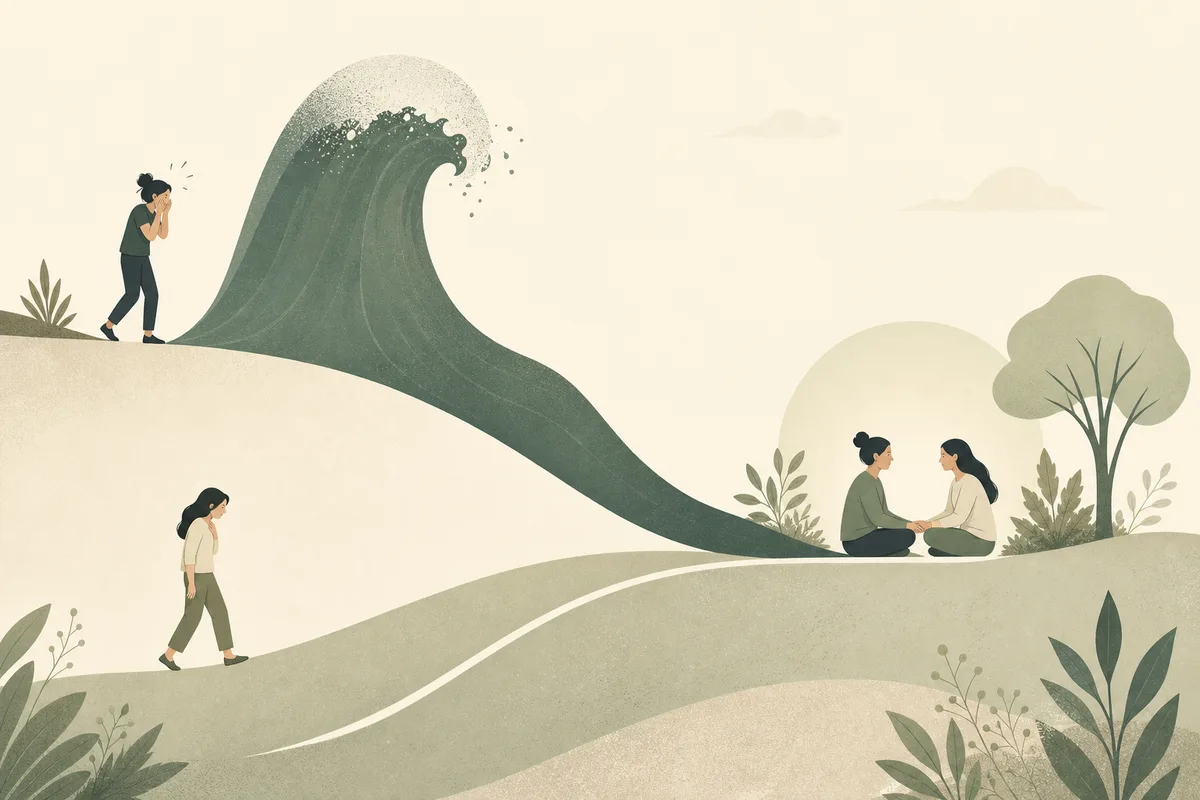
People use "anxiety attack" and "panic attack" as if they were two names for the same event. They are not. One is a defined clinical term with a specific meaning. The other is an everyday phrase that different people use for very different experiences. A friend, a doctor, and a search result can mean three different things by the same words.
One term is clinical, the other is not
A panic attack is a defined episode: a sudden surge of intense fear or discomfort that arrives with a cluster of physical and mental symptoms. The NHS describes panic attacks as coming on quickly, commonly with a racing heart, sweating, trembling, breathlessness, dizziness, nausea, tingling, or a fear of losing control.
"Anxiety attack" has no equivalent definition. Cleveland Clinic notes that the DSM-5-TR, the current reference for diagnosing mental illness, does not recognise or define an anxiety attack. People use the phrase, but they point at different experiences: a long build of dread, a day of feeling overwhelmed, a spike of worry that never quite tips into panic, or an actual panic attack described in plainer words.
So "which one did I have?" often has no single answer.
How the two experiences usually differ
What people describe as a panic attack tends to arrive fast, feel overwhelmingly physical, and pass relatively quickly. Cleveland Clinic puts the typical span at roughly 15 to 20 minutes. It can occur with an obvious trigger or without one, which is part of what makes it frightening.
What people describe as an anxiety attack tends to build more gradually around something recognisable: a deadline, a conversation, a piece of news, a decision. It often lasts as long as the situation or the thought loop lasts, which can mean hours or days rather than minutes.
A stretch of high anxiety can contain a sudden panic surge. A panic attack can leave behind hours of anxious aftermath. If you want the mechanics of the slower version, what an anxiety loop is covers how worry sustains itself.
Why the description beats the label
Useful things to say: how fast it came on, how long it lasted, what your body did, what you were afraid would happen, whether anything set it off, and what you did in response. That gives a professional something to work with. "I had an anxiety attack" does not, because they cannot know which of several meanings you intend.
A sudden physical surge and a slow grinding worry respond to different things. For the surge, slowing the exhale and orienting to the room tends to help more than reasoning; how to calm down during a panic attack goes through that in detail. For the slow build, the more useful move is usually to name the actual problem and pick one action, rather than trying to calm a feeling that is being continuously refilled.
When to have it checked
Panic-like symptoms are not exclusive to panic. A racing heart, chest discomfort, breathlessness, and dizziness all have other possible causes, some of which need assessment. New, severe, or changing physical symptoms deserve medical attention rather than a self-applied label, and panic attack versus heart attack covers that boundary specifically.
One episode also does not make a disorder. Panic disorder describes a broader recurring pattern, including how much the fear of the next attack starts shaping your life, and that is something a qualified professional assesses rather than something you diagnose from a symptom list.
You can act without the correct word. Describe what happened, how fast it built, and what you felt.
Related pages
Frequently asked questions
Can an anxiety attack turn into a panic attack? +
A stretch of high anxiety can contain a sudden panic surge, and many people describe that sequence.
How long does a panic attack last? +
Cleveland Clinic puts the usual span at around 15 to 20 minutes, with the peak arriving early. The after-effects can last considerably longer, which is why people often feel drained for the rest of the day.
Does one panic attack mean I have panic disorder? +
No. Panic disorder involves a broader recurring pattern, including persistent worry about further attacks and changes in behaviour to avoid them. Only a qualified professional can assess that.
Why does my doctor say anxiety attack is not a real term? +
They mean it has no clinical definition, not that your experience was not real. It is a widely used everyday phrase.
Author
Sebastian Cochinescu · Founder, Anima Felix
Founder of Anima Felix. Writes about everyday anxiety patterns, practical calming tools, and how conversational product design can support people in anxious moments.
Read author profileWhere Anima Felix fits
Support for the surge and for the slow build
Anima Felix offers grounding and breathing for a sudden surge, and a short check-in for the slower kind of worry that keeps refilling itself. It is wellness support for that moment. It does not diagnose panic disorder, decide what your symptoms mean, or provide emergency care.
More from the blog
Can Anxiety Cause Diarrhea and Sudden Bathroom Urgency?
Anxiety can change how your gut behaves. The harder problem is usually the loop that forms afterwards, when every trip out starts getting planned around bathrooms.
Mind and bodyCan Nicotine or Vaping Make Anxiety and Panic Worse?
Nicotine feels like it takes the edge off. What it mostly takes off is the edge nicotine put there in the first place.
Body symptomsShortness of Breath: Anxiety or Something Else?
Anxiety can make it hard to breathe. It is also one of the symptoms you should be slowest to explain away on your own, because the same feeling has many other causes.