
Anxiety Before and During Your Period
If your anxiety reliably climbs in the week before your period and eases once it starts, you are not imagining a pattern. Hormone shifts change how your brain regulates calm, on a schedule.
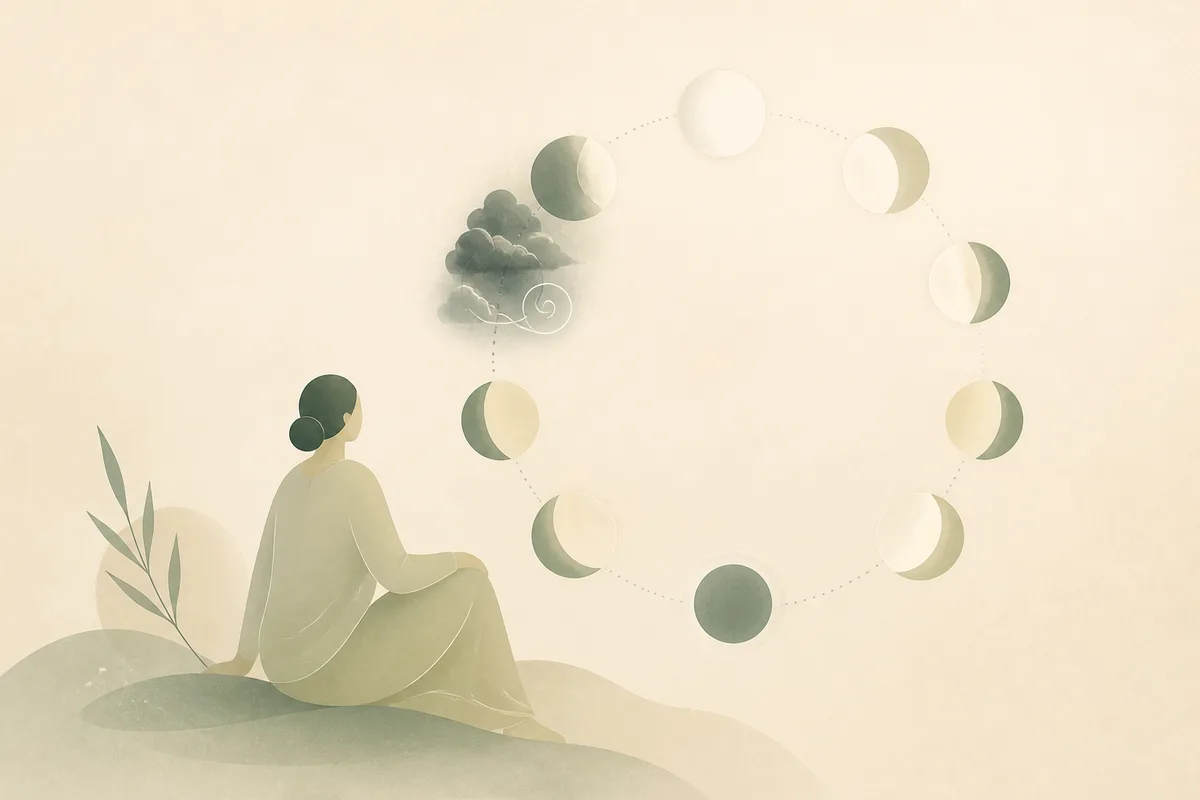
If your anxiety reliably climbs in the week or so before your period and eases once it starts, you are not imagining a pattern. Hormone shifts in the second half of the cycle change how your brain regulates calm, and for some people the main premenstrual symptom is not cramps or sadness but anxiety: a wound-up, irritable, everything-is-too-much feeling that arrives on schedule.
The luteal-phase mechanism
After ovulation, in what is called the luteal phase, estrogen and progesterone first rise and then fall steeply if no pregnancy begins. Two things about that swing matter for anxiety.
First, a breakdown product of progesterone acts on the same calming GABA system that anti-anxiety medications target. As progesterone drops in the days before your period, that calming input drops with it, and a nervous system that was already prone to anxiety feels the loss most.
Second, estrogen supports serotonin, one of the brain's main mood stabilizers. Falling estrogen late in the cycle means less of that support, which can amplify worry, irritability, and low mood at the same time.
None of this means the anxiety is "just hormones" in the dismissive sense. The trigger is hormonal; the anxiety is real.
Why your stomach joins in
Many people notice nausea or a queasy, unsettled stomach in the same window. Hormone shifts affect the gut directly, prostaglandins released around menstruation can upset digestion, and anxiety itself talks to the stomach through the gut-brain axis. The result is a loop where premenstrual anxiety and premenstrual nausea feed each other, which is why the two so often arrive together.
What helps
Track it for two cycles. Note your anxiety level daily alongside your cycle. If a pattern shows up in the 7 to 10 days before your period and eases after it starts, you have real information, both for yourself and for a doctor.
Plan around the window, not against it. If you know which days run hot, schedule less into them where you can, and treat the anxiety spikes as weather with a forecast rather than a personal failure.
Use body-first tools in the moment. Slow breathing and grounding work on the same nervous system the hormones are rattling. They do not remove the hormonal driver, but they lower the peak.
Mind the basics that this window punishes. Poor sleep, skipped meals, alcohol, and heavy caffeine all land harder in the late luteal phase.
If the premenstrual week reliably brings anxiety or mood changes severe enough to disrupt work, relationships, or daily life, talk to a doctor or gynecologist. Severe cyclical symptoms can be premenstrual dysphoric disorder (PMDD), which is a recognized, treatable condition - and this article cannot diagnose it. Do not start or stop any medication, including hormonal contraception, based on a blog post.
Related pages
Frequently asked questions
Why do I get anxiety before my period? +
Falling progesterone reduces input to the brain's calming GABA system, and falling estrogen reduces serotonin support, in the days before your period. For some people that hormonal one-two shows up mainly as anxiety.
Does period anxiety go away when the period starts? +
Often, yes. For many people symptoms ease within the first days of bleeding as hormones begin their next cycle. If anxiety runs through the whole month, the cycle may be an amplifier rather than the cause.
Is anxiety before a period the same as PMDD? +
No. Premenstrual anxiety is common and usually manageable. PMDD is a severe, diagnosable form of premenstrual mood disturbance that significantly disrupts life and deserves professional care. Only a clinician can make that distinction.
Can periods cause nausea too? +
Yes. Hormone shifts and prostaglandins can unsettle the stomach directly, and premenstrual anxiety adds to it through the gut-brain axis, which is why nausea and anxiety often share the same window.
Author
Sebastian Cochinescu · Founder, Anima Felix
Founder of Anima Felix. Writes about everyday anxiety patterns, practical calming tools, and how conversational product design can support people in anxious moments.
Read author profileWhere Anima Felix fits
Make the pattern visible
A pattern you can see is easier to live with. Anima Felix gives you a quick daily check-in that helps the cycle pattern become visible, plus calm breathing and grounding for the spike days. Support for the pattern, not a replacement for medical care.
More from the blog
How Anxiety Affects Your Sleep (and What to Do)
Anxiety can keep your body alert when you need rest, then teach your brain to associate bed with effort. Understanding that cycle points to practical ways to loosen it.
Understanding anxietySigns You're Recovering From Anxiety
Recovery from anxiety can be easy to miss because ordinary days replace dramatic moments. The clearest signs appear in what gets your attention and what no longer controls your choices.
Mind and bodyCaffeine and Anxiety: How Much Is Too Much?
Caffeine can create the same racing heart, jitters, and restlessness that come with anxiety. The useful limit is personal, and it may be well below the general adult safety ceiling.